

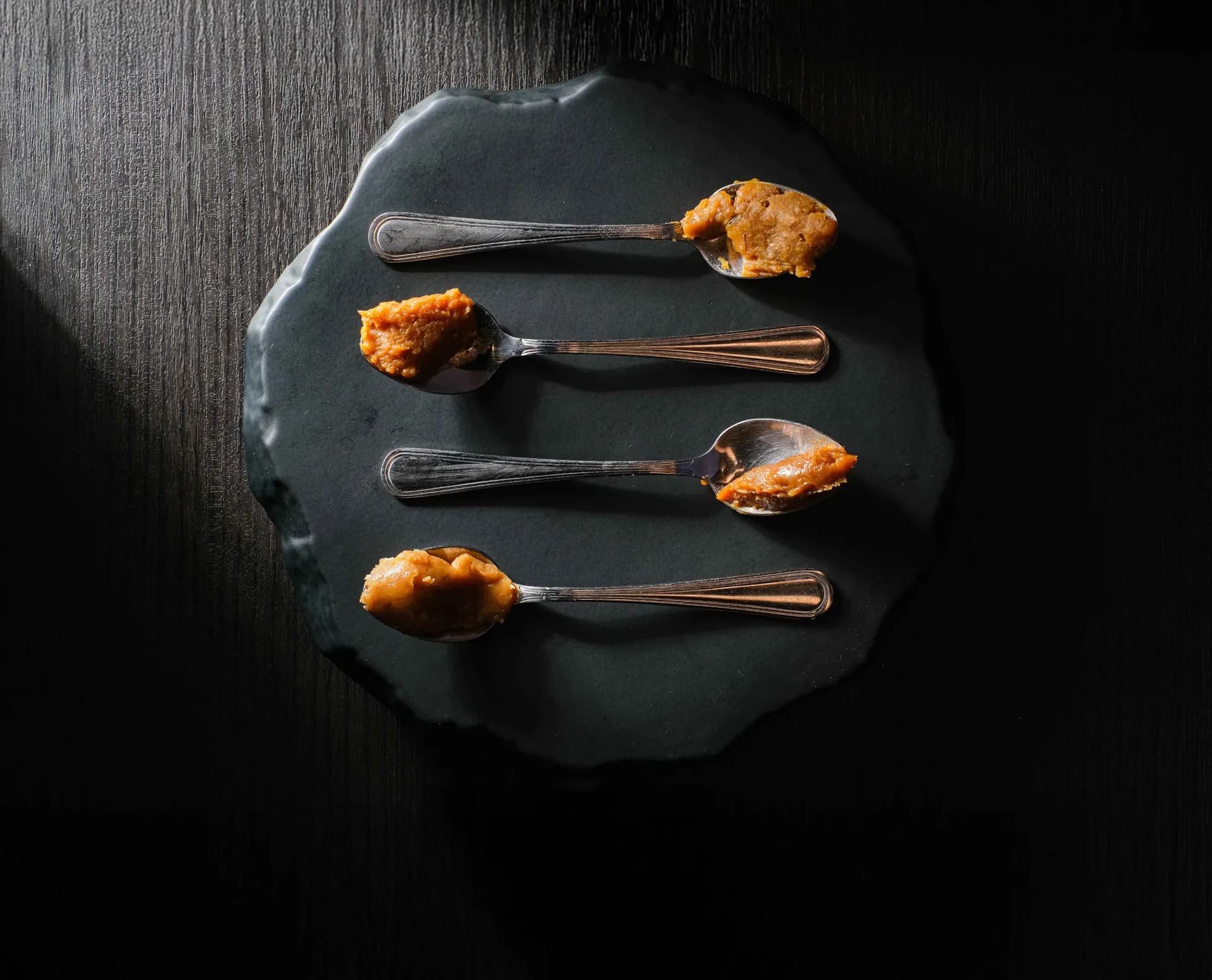
Fermentation lab
Behind our kitchen lies a space devoted to transformation. In our dedicated lab, we craft misos, garums, and vinegars through time, care, and controlled conditions — each process guided by curiosity and precision. These ferments form the foundation of our cuisine, bringing depth, balance, and character to every dish.
More than technique, fermentation reflects our belief in transformation — where patience and science work hand in hand to reveal flavour at its fullest.
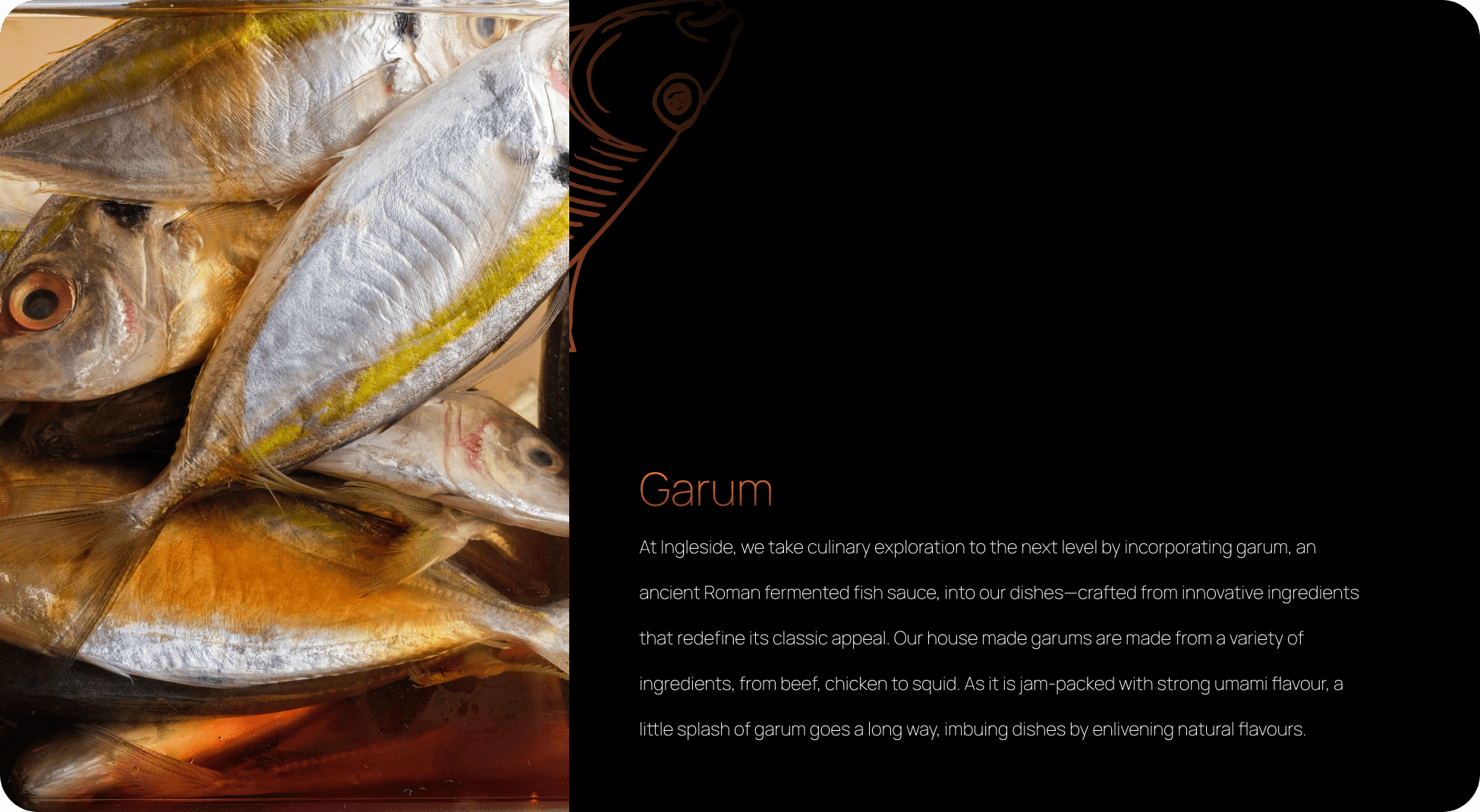
Garum
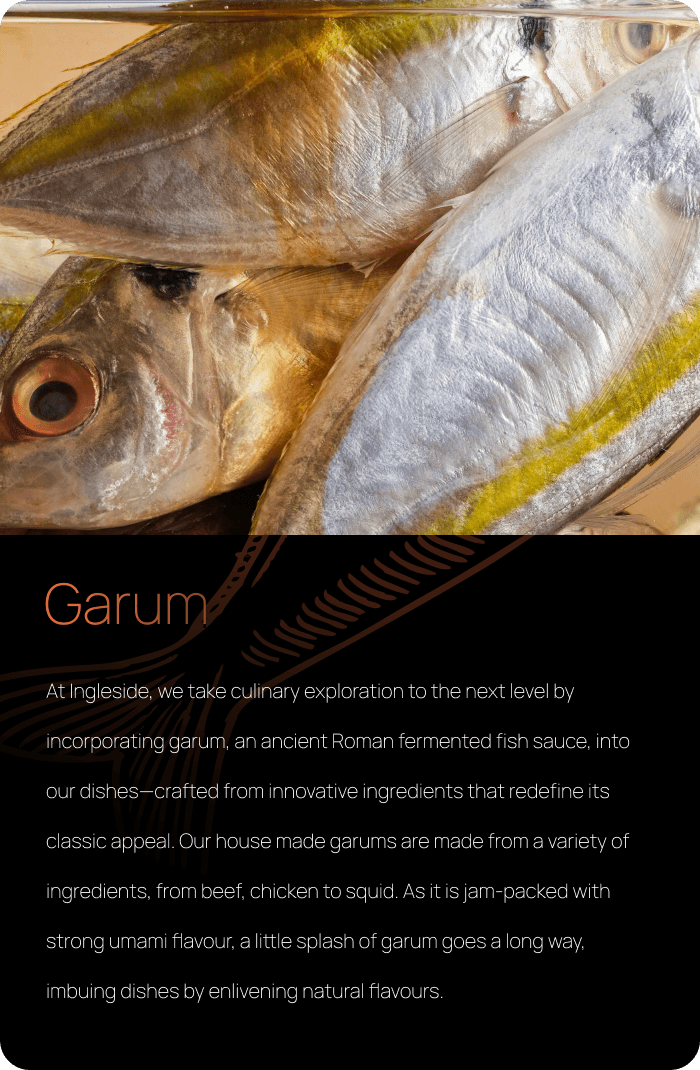
At Ingleside, we take culinary exploration to the next level by incorporating garum, an ancient Roman fermented fish sauce, into our dishes — crafted from innovative ingredients that redefine its classic appeal. Our house made garums are made from a variety of ingredients, from beef, chicken to squid. As it is jam-packed with strong umami flavour, a little splash of garum goes a long way, imbuing dishes by enlivening natural flavours.
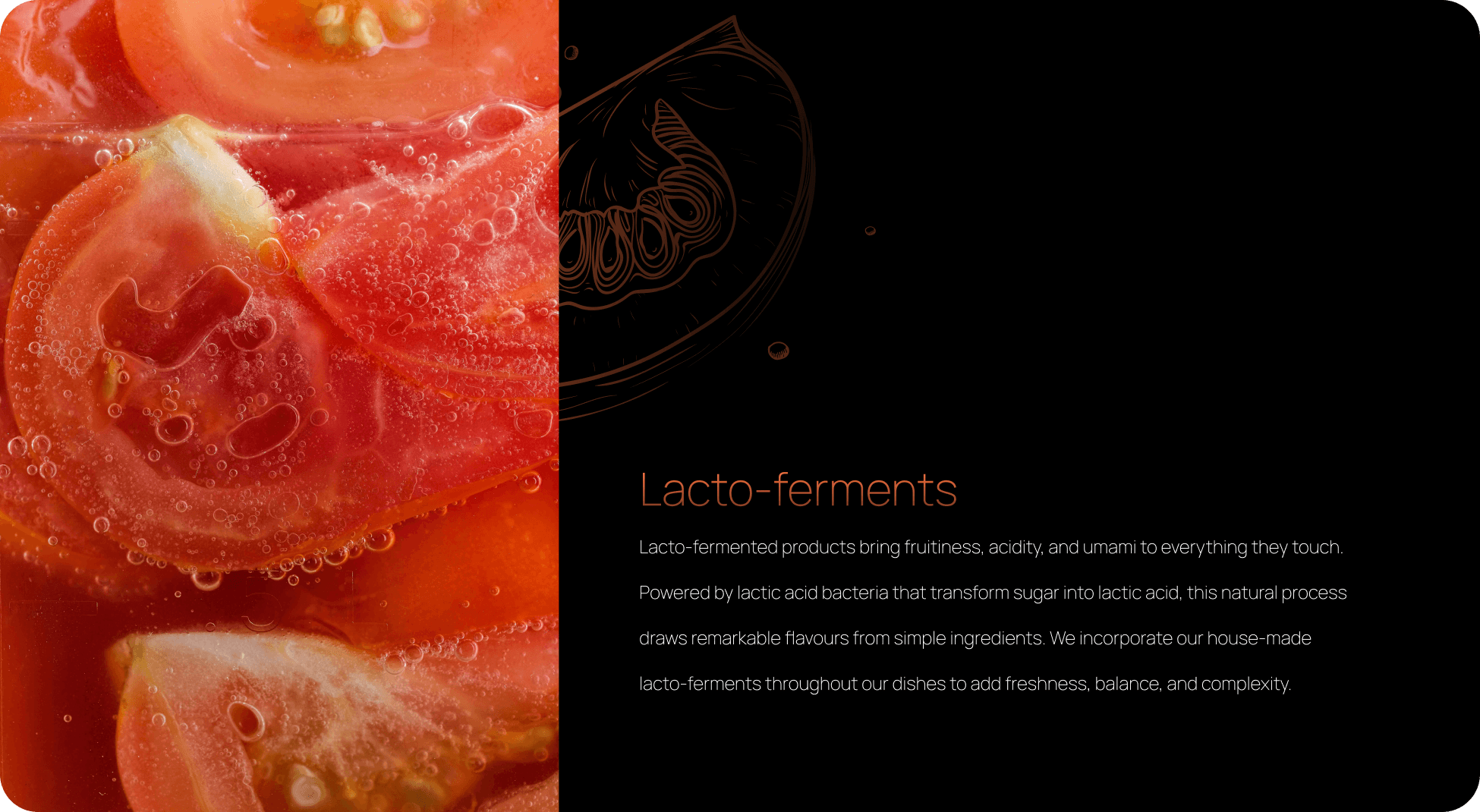
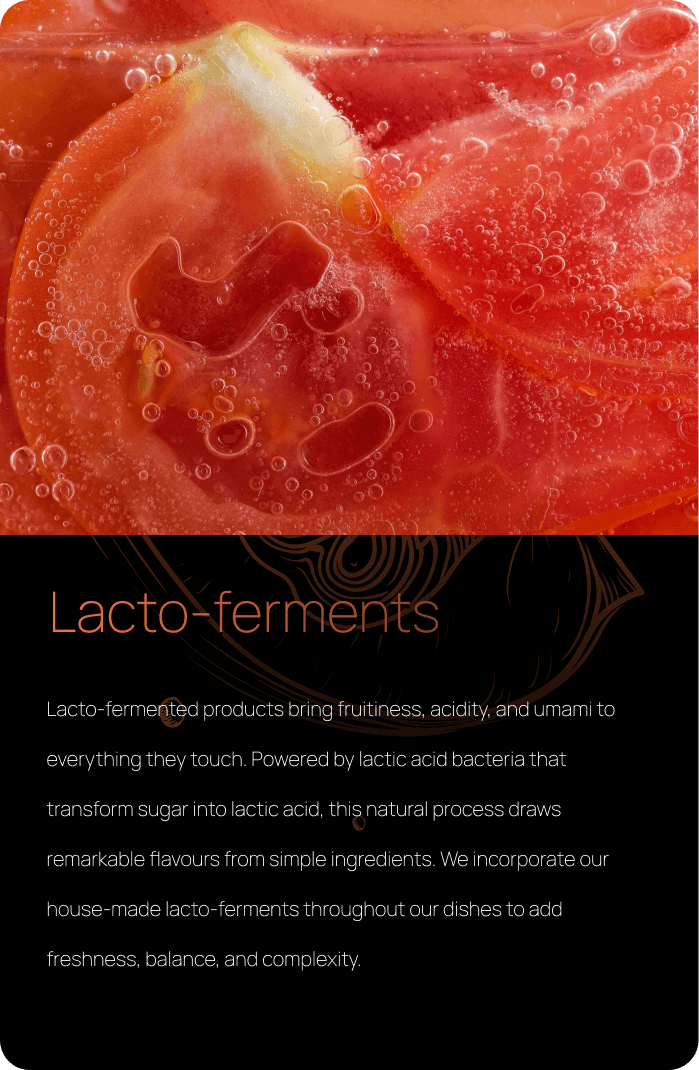
Lacto-ferments
Lacto-fermented products bring fruitiness, acidity, and umami to everything they touch. Powered by lactic acid bacteria that transform sugar into lactic acid, this natural process draws remarkable flavours from simple ingredients. We incorporate our house-made lacto-ferments throughout our dishes to add freshness, balance, and complexity.
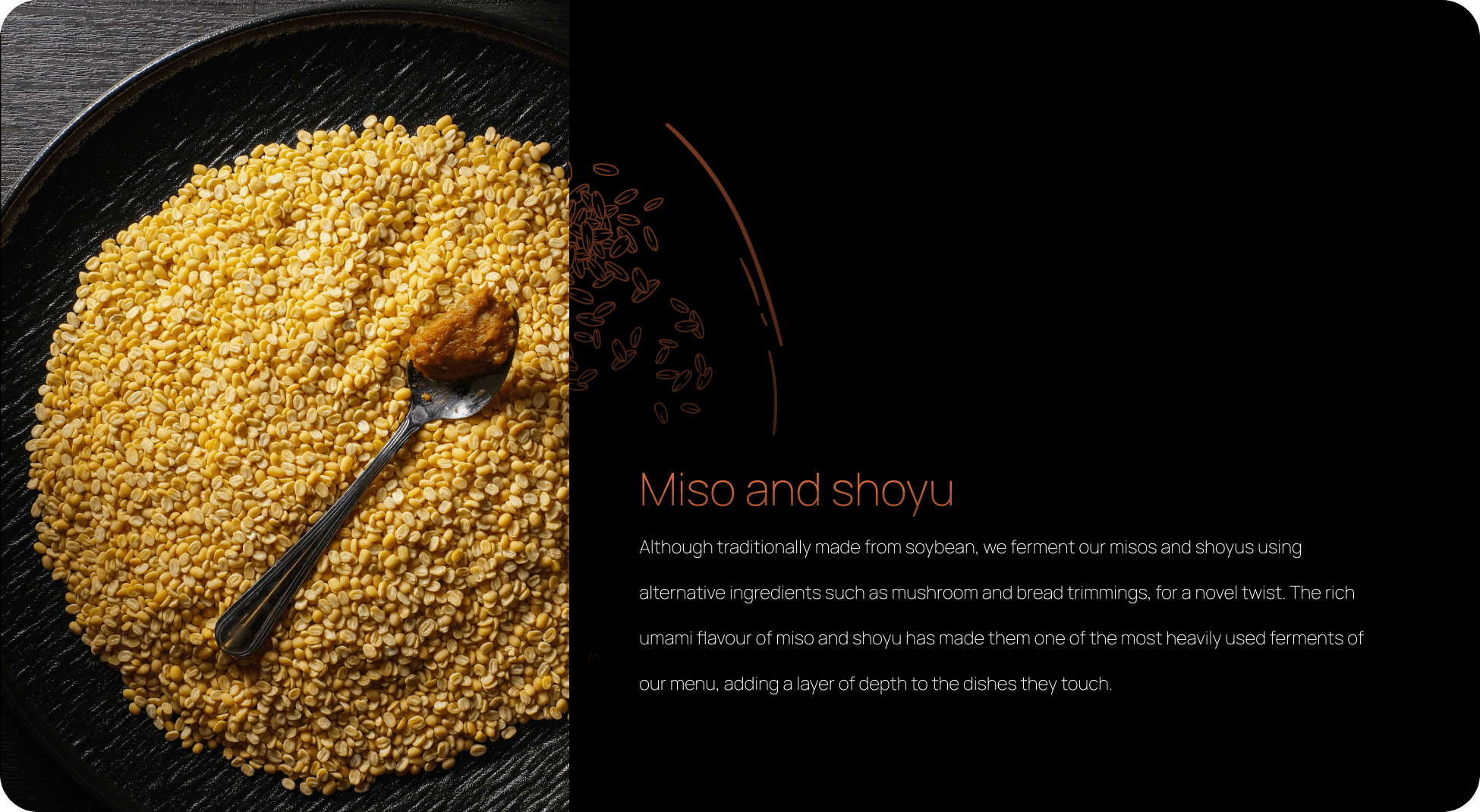
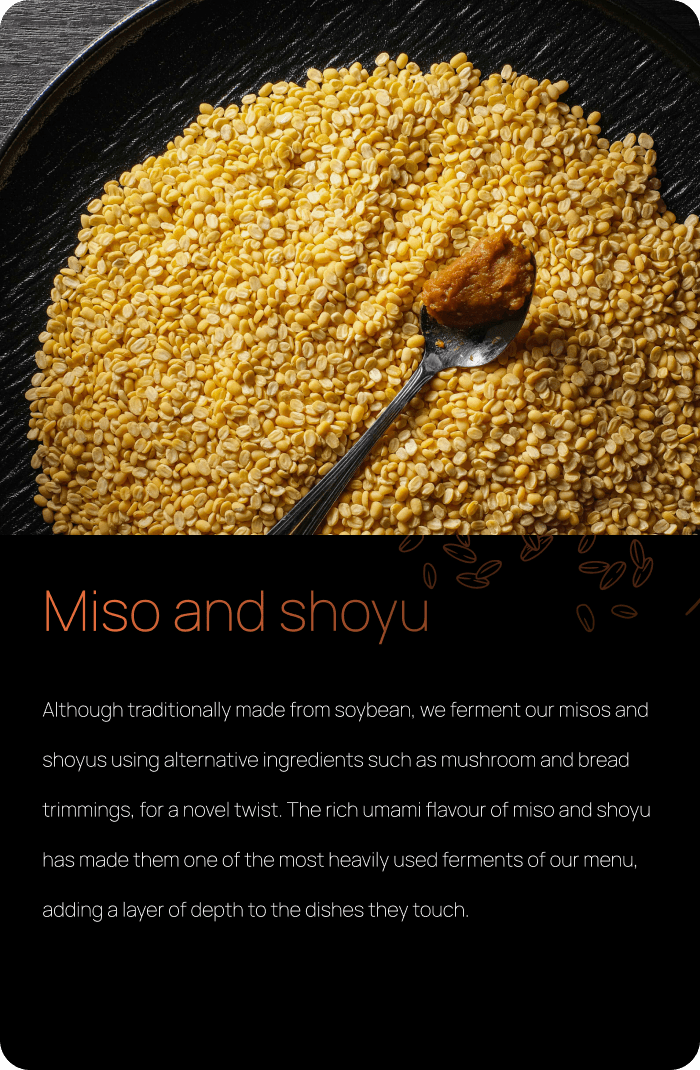
Miso and shoyu
Although traditionally made from soybean, we ferment our misos and shoyus using alternative ingredients such as mushroom and bread trimmings, for a novel twist. The rich umami flavour of miso and shoyu has made them one of the most heavily used ferments of our menu, adding a layer of depth to the dishes they touch.
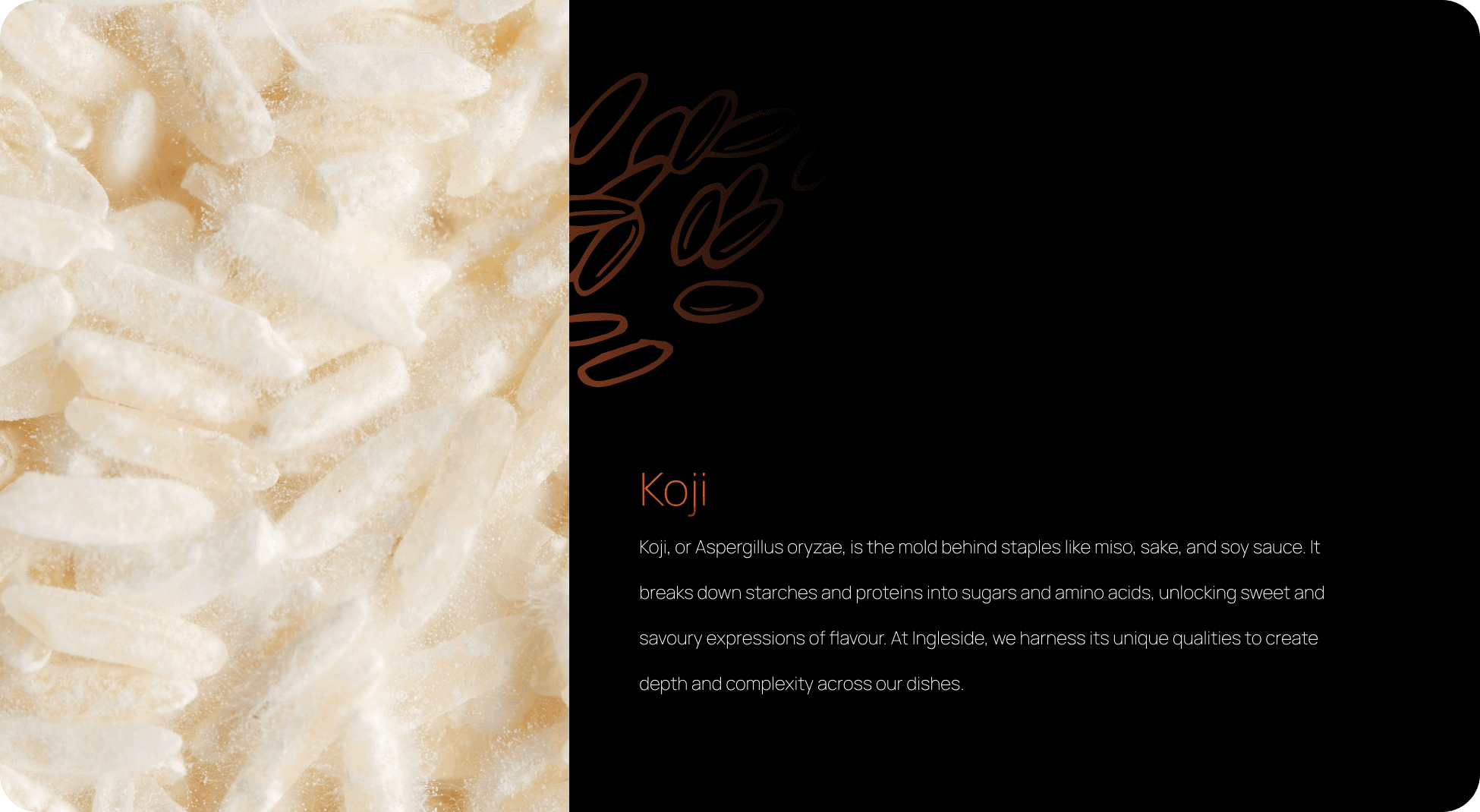
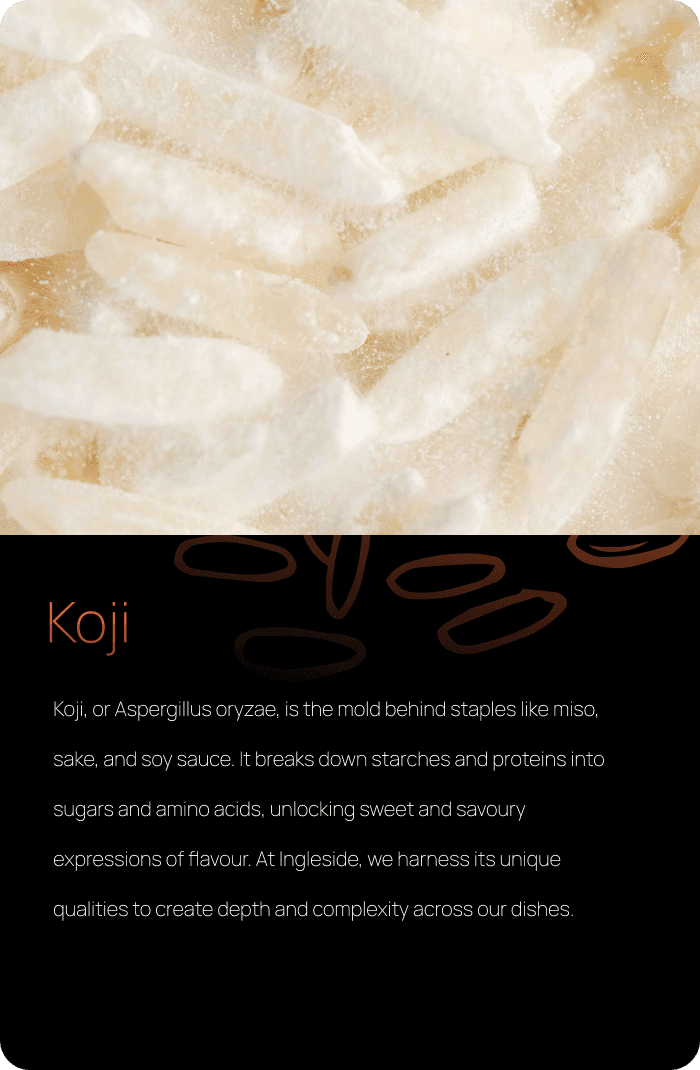
Koji
Koji, or Aspergillus oryzae, is the mold behind staples like miso, sake, and soy sauce. It breaks down starches and proteins into sugars and amino acids, unlocking sweet and savoury expressions of flavour. At Ingleside, we harness its unique qualities to create depth and complexity across our dishes.

We believe that every part of the food we use has value and through fermentation, we can transform kitchen waste and trimmings into culinary gold.
We have successfully upcycled our meat and seafood trimmings to make garums, surplus bread to make misos and spent coffee grounds to make shoyus.
This practice not only reduces our environmental footprint but also allows us to offer dishes that tell a story of creativity and respect for nature.